Should You Invest in a Garage Box in Belgium? (2026 Update)
This post was originally published in September 2020. The core logic of garage box investing still holds, but a lot has changed since then: registration duties, the EV revolution, mobility policy, and the interest rate environment all look different in 2026. I’ve rewritten this from scratch using current, sourced data.
Back in 2020, I wrote about parking spaces and garage boxes as investments after reading JoneyTalks’ post about his Oslo parking spots. My thought was simple: Does this make sense? I think six years later, this is still valid. The explanation, however, has picked up a few asterisks along the way.
Registration duties went up. Savings accounts started actually paying something. EVs went from a fun government talking point to two-thirds of new car sales. If you bought a garage in 2020 based on that post, you’re probably fine. If you’re thinking about buying one now, you should at least know what’s different.
New Mobility: The Picture is more complex than in 2020
In 2020, I noted that younger generations were moving away from car ownership and that city policies were pushing cars out of urban centers. Both trends have continued and accelerated a bit.
Brussels is the clearest example. The Good Move regional mobility plan, which officially launched in 2020, has been running long enough to show real results. Traffic in the city’s central Pentagon zone dropped by roughly 19% within the first six months of implementation. The region’s stated target is a 24% reduction in car traffic by 2030, and that direction isn’t changing with any new government.
Other Belgian cities have introduced or expanded low-emission zones, reduced on-street parking, and invested in cycling infrastructure. These policies are real, they are biting, and they are structural rather than temporary.
At the same time, the picture is not one-sided. Cars have not disappeared. The total Belgian vehicle fleet is not shrinking. And in suburbs and smaller cities, the demand for secure, covered parking remains robust. The mobility shift is a city-center and youth-cohort story more than a national one. For a garage box investor, location sensitivity has increased considerably since 2020. A box in a Brussels neighborhood with high parking pressure and low street availability remains in demand. A box in a car-light residential area of the same city is a different proposition.
But Still a Simple Diversification
The fundamentals that made garage boxes appealing in 2020 still apply in 2026:
- Low maintenance:
- No kitchen
- No bathroom
- No broken boiler at 2 am
- Administrative burden is minimal
- Non-payment is rare
- Vacancy periods are typically short in well-chosen locations
Compared to residential rental property, the return-to-headache ratio is still very favorable, and it fits the same “boring assets, low drama” approach as the rest of my portfolio.
The EV Factor: The Part Nobody Talked About in 2020
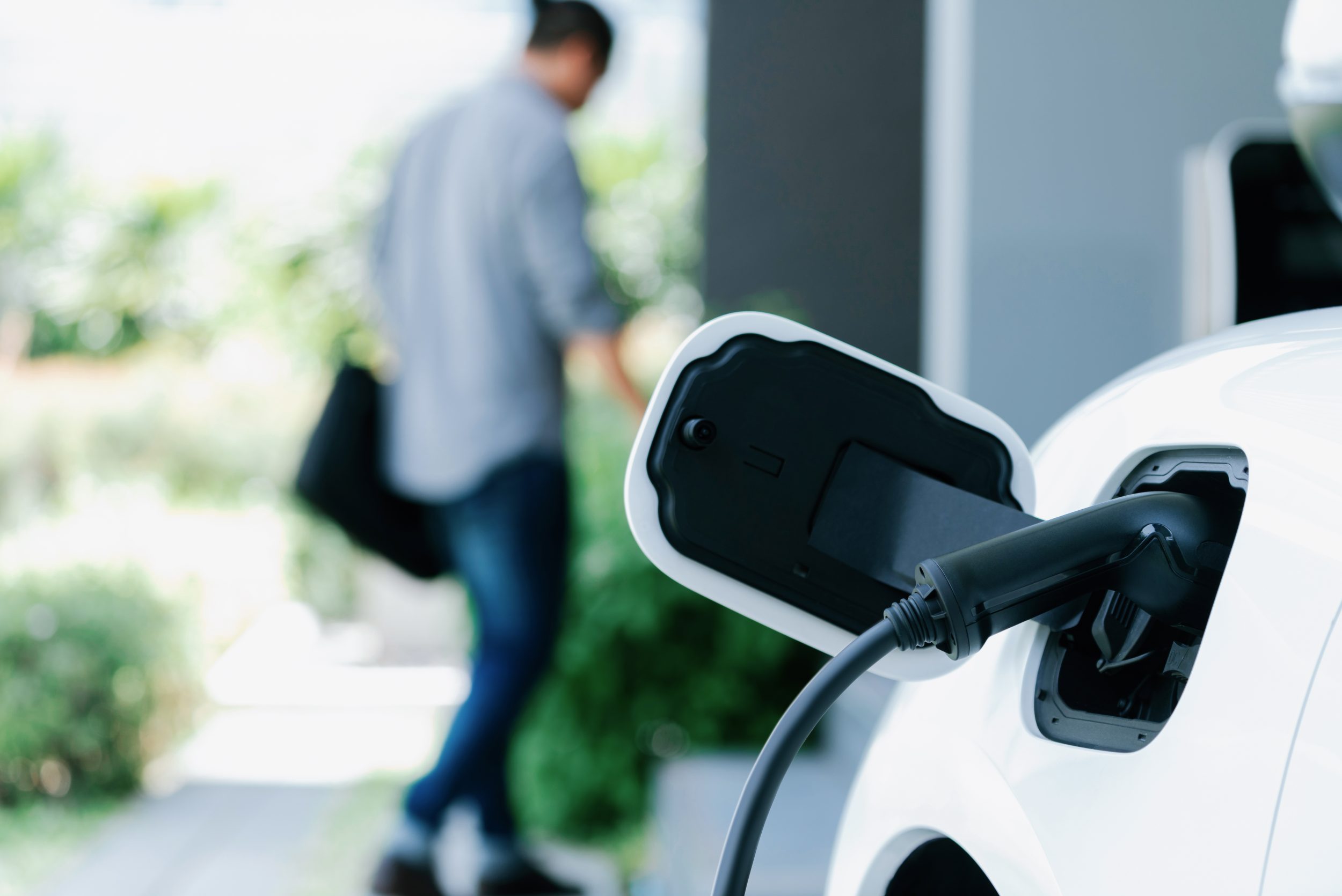
In the original post, I mentioned EV charging poles in new constructions almost as a footnote. What a cute thought. Turns out that footnote became the chapter.
In 2024, battery electric vehicles alone accounted for 28.5% of new car registrations in Belgium, according to Statbel. Add in hybrids, and you get 66% of all new vehicle sales. The Belgian EV fleet hit roughly 450,000 vehicles by the end of 2025, up 55% in a single year. That is not a niche trend anymore. That is the market.
For garage boxes specifically, this cuts both ways. An open-air parking spot is quietly becoming less appealing to a growing share of drivers because EV drivers want to charge overnight, not circle around looking for a public fast charger. A closed garage box with a working electrical outlet, on the other hand, is becoming more attractive, not less. Home charging is cheaper, more convenient, and, frankly, what most EV drivers prefer for daily use.
So here is the question you need to ask before signing anything: does the box have electricity? If not, can it be installed? What does the building’s reglement van mede-eigendom say about personal charging points? A syndicus who has already voted against EV infrastructure, or a building where the electrical capacity simply isn’t there, is a problem that compounds over time, not one that resolves itself.
A box with a charging point in a building full of company car drivers is an increasingly easy rent. A box without one in the same building will have a harder time justifying a premium five years from now. That distinction barely existed in 2020. It matters now.
What Does a Garage Box Cost in 2026?
Hard, fresh data from the Federatie van het Notariaat (Fednot) specifically for garages is not yet available for 2025 transactions. The most recent Fednot figures on parking spaces date to 2019, when the national average was €29,242, with regional averages of €31,305 in Flanders, €28,681 in Brussels, and €21,864 in Wallonia. Coastal Flanders was an outlier, averaging €57,700 in places like Knokke-Heist.
Based on current market data, a closed garage box in Belgium now typically trades in the €22,000 to €50,000 range, with higher prices in city centers and coastal municipalities and lower prices outside major urban areas. New-build complexes in prime locations can exceed this range.
The old rule of thumb about location still applies completely. Prices vary enormously from street to street, and two boxes in the same postcode can trade at very different levels depending on building quality, access, security, and the surrounding parking pressure.
Supply and Demand
The supply dynamics haven’t changed much. Well-located garage boxes rarely appear on the market because owners hold them. In high-demand areas, buyers sometimes wait for a box in a specific building rather than looking elsewhere. This illiquidity cuts both ways: it protects your resale price, but it also means you need to be patient as a buyer and avoid overpaying at entry.
In rural areas, a single large new-build development can suddenly flood the local market and compress both prices and rents. That risk hasn’t changed since 2020.
What Rental Income Can You Expect?
Based on 2026 market data, a closed garage box in a well-located urban area in Belgium typically rents for €90-€160 per month. Open parking spots are cheaper to buy and rent for less, somewhere between €50 and €110 depending on location.
Premium locations, coastal properties or boxes with dedicated EV charging can go higher. Peripheral locations or boxes with poor access will sit at the lower end or struggle to find a tenant at all.
These numbers are from active Belgian rental markets. As always, you need to verify the actual going rate in the specific neighborhood before you buy. The way to do this is simple: look at what comparable spaces in the same street or building are currently rented for, or ask locals.
A Real Return of 2 to 4%… And Why That Number Hits Differently Today
The headline return range for Belgian garage boxes has not changed dramatically. Over the past decade or two, investors have generally landed somewhere between 2% and 4% net. That range is still roughly where the market sits in 2026, though getting to the upper end of it requires you to not overpay on entry and to be in a location people actually want.
Here is a concrete example. A closed box at €30,000, with all acquisition costs (registration duties, notary, deed) adding around €5,500, puts your total investment at €35,500. Renting at €120 per month gives you €1,440 gross per year. Gross yield: 4.1%. After annual costs of around €250 for insurance, property tax, and minor maintenance, you are looking at roughly 3.35% net. That is a reasonable number.
The problem is what you are comparing it against. In 2020, a Belgian savings account paid you something functionally indistinguishable from zero. Earning 3% from a garage felt clever by comparison. In 2026, your bank will give you around 2.5 to 3% to do absolutely nothing, with no risk, full liquidity, and no syndicus to argue with. The gap between “locked into a concrete box” and “money sitting in my account” has closed considerably.
This does not make garage boxes a bad investment. It makes a mediocre garage box a bad investment. The ones trading at elevated prices in areas with softening demand, bought by people who did not run the full acquisition cost calculation, those are the ones that will disappoint. A well-priced box in a location with genuine structural demand still earns its place in a portfolio. You just need to be more disciplined about what “well-priced” actually means than you did when the alternative was zero.
How Do You Create a Garage Rental Contract?
So you’re convinced this is still your thing. Good news: the administrative side of renting a garage box is refreshingly simple.
You are not bound by the Housing Rental Act (Woninghuurwet / Loi sur les baux d’habitation), which only applies to residential main residences. This gives you freedom on rent levels, deposit amounts, and contract duration.
Best practice is to draw up a written contract and have it registered. The contract should specify:
- The agreed monthly rent and indexation clause
- What the space may be used for (parking, storage, or both)
- Whether professional use is permitted, and if not, a clause explicitly excluding it (relevant for your tax position)
- Who bears the property tax (onroerende voorheffing), which you can pass on to the tenant
- The condition of the space at handover
- Insurance obligations for the tenant
Keep the contract simple. Overly complex documents create disputes where there would otherwise be none.
Registration Duties and Purchase Costs: What Changed in 2025
Belgium being Belgium, the tax rules have of course been updated since 2020. And as is tradition, the update is more generous for owner-occupiers and more expensive for investors.
In Flanders, the standard registration duty for any property that is not your sole primary residence is now 12%, up from 10% since 2025. That is the rate that applies to garage box purchases. The heavily promoted 2% rate you may have seen in headlines applies only to people buying their one and only home to live in, under strict conditions. Not you, in this scenario.
In Wallonia, the investor rate stays at 12.5%. The new 3% rate introduced in 2025 is again exclusively for primary sole residences. Brussels holds at 12.5% for investment purchases, unchanged.
For new-build garages, VAT at 21% applies instead of registration duties, which is a different kind of painful.
On top of whichever rate applies to you, add notary fees and deed costs. For a purchase in the €20,000 to €45,000 range, that typically runs €1,200 to €2,000. So in Flanders, you are looking at total acquisition costs of roughly 14 to 16% on top of the purchase price before you have done anything at all. Factor that into your return calculation from day one, not as an afterthought when you are already emotionally committed to a specific box.
Income Tax on Rental Income
If you rent your garage box to a private individual who does not use it for professional purposes, you declare the non-indexed cadastral income (kadastraal inkomen / revenu cadastral) on your annual tax return. The actual taxable amount is calculated by the tax authorities as the indexed cadastral income multiplied by 1.4.
For income year 2025 (tax year 2026), the indexation coefficient is 2.2446 (source: FPS Finance / FOD Financiën). For income year 2026 (tax year 2027), it rises to 2.3000.
As an example: if the non-indexed cadastral income of your garage is €450, the indexed amount for 2025 is approximately €1,010 (€450 x 2.2446), and the taxable real estate income is €1,414 (€1,010 x 1.4). The effective tax you pay on this depends on your personal income tax bracket.
If your tenant declares the rental payments as professional expenses, different rules apply and your real rental income becomes taxable rather than the cadastral income. To avoid this outcome, include a clause in your contract stipulating that the space may not be used for professional purposes.
VAT position: Renting out a garage box is subject to VAT. The small business exemption (vrijstellingsregeling / franchise des petites entreprises) threshold in Belgium remains at €25,000 annual turnover from 2025 onward. If your total annual rental income stays below this threshold, you can apply for exemption from charging VAT to your tenants, though you must still register for a VAT number.
So, Should You Still Invest in a Garage in 2026?
Yes, probably, maybe. With more homework than before.
A well-located box, bought at a realistic price, with electricity and a tenant who actually needs covered parking is still a solid low-maintenance income stream. You are not going to retire on a single garage box in Leuven, but that was never the point. The point was steady, boring cash flow with minimal landlord drama. No burst pipes. No broken boilers. No tenant who adopts four cats and paints the walls purple. That part has not changed.
What has changed is the margin for error. In 2020, you could buy an okay box in an okay location at an okay price and still do okay, partly because the opportunity cost of tying up money in concrete was basically zero. In 2026, you need to be more calculated. The entry costs in Flanders are higher (12% registration duties), the comparison against savings accounts is less flattering (2.5 to 3% for doing nothing), and the EV question is now a real criterion rather than something you think about later.
Check what comparable spaces in the same street are actually renting for, not what the seller’s agent claims. Ask about the electrical situation before you fall in love with the price. Run the full acquisition cost into your yield calculation from the start. And be honest with yourself about the location: is there genuine structural parking pressure here, or are you just buying because the price seemed low?
If the numbers still work after all of that, they probably actually work. If they only work when you squint and assume best-case rent with zero vacancy, wait for a better box.
Do you own a garage box already, or are you considering it? Would love to hear what market you are looking at in the comments below.
Sources:
- Registration duties in Flanders: Vlaanderen.be
- Income tax on rental income / indexation coefficients: FPS Finance / FOD Financiën
- Garage box prices (2019 Fednot data, most recent available): Notaris.be
- EV market share Belgium 2024 (BEVs at 28.5%): Statbel
- Hybrid + electric = 66% of 2024 new car sales: Statbel
- EV fleet growth 2025 (55% in one year): Statbel
- Belgium EV 2025 growth data: European Alternative Fuels Observatory (EAFO)
- Brussels Good Move traffic reduction (19%): TheMayor.EU
- Brussels Good Move regional plan: Brussels Mobility
- Garage box yield and price ranges 2026: Track.be
- Wallonia registration duty changes 2025: MDS
- VAT small business exemption Belgium 2025: RSM Belgium